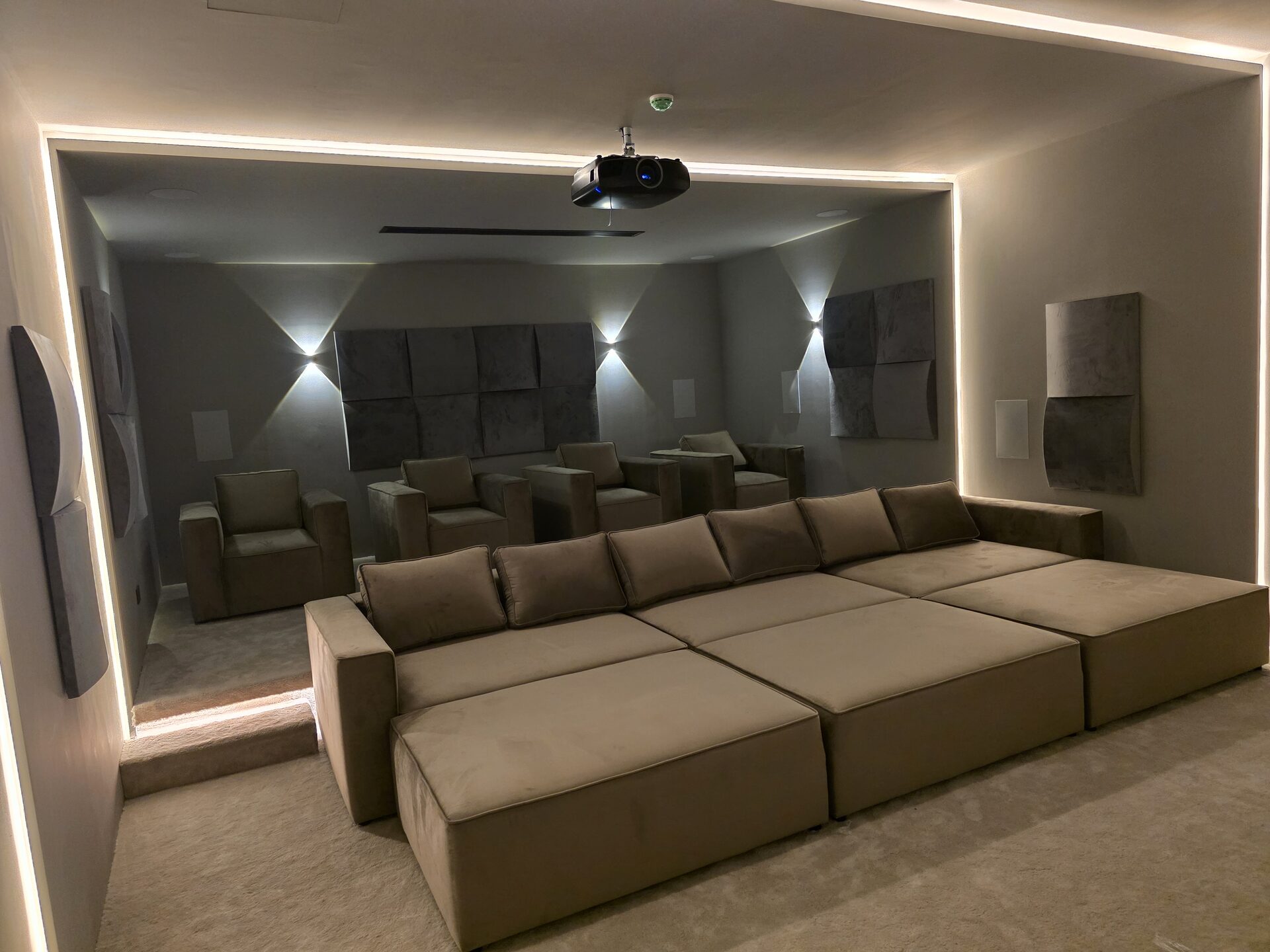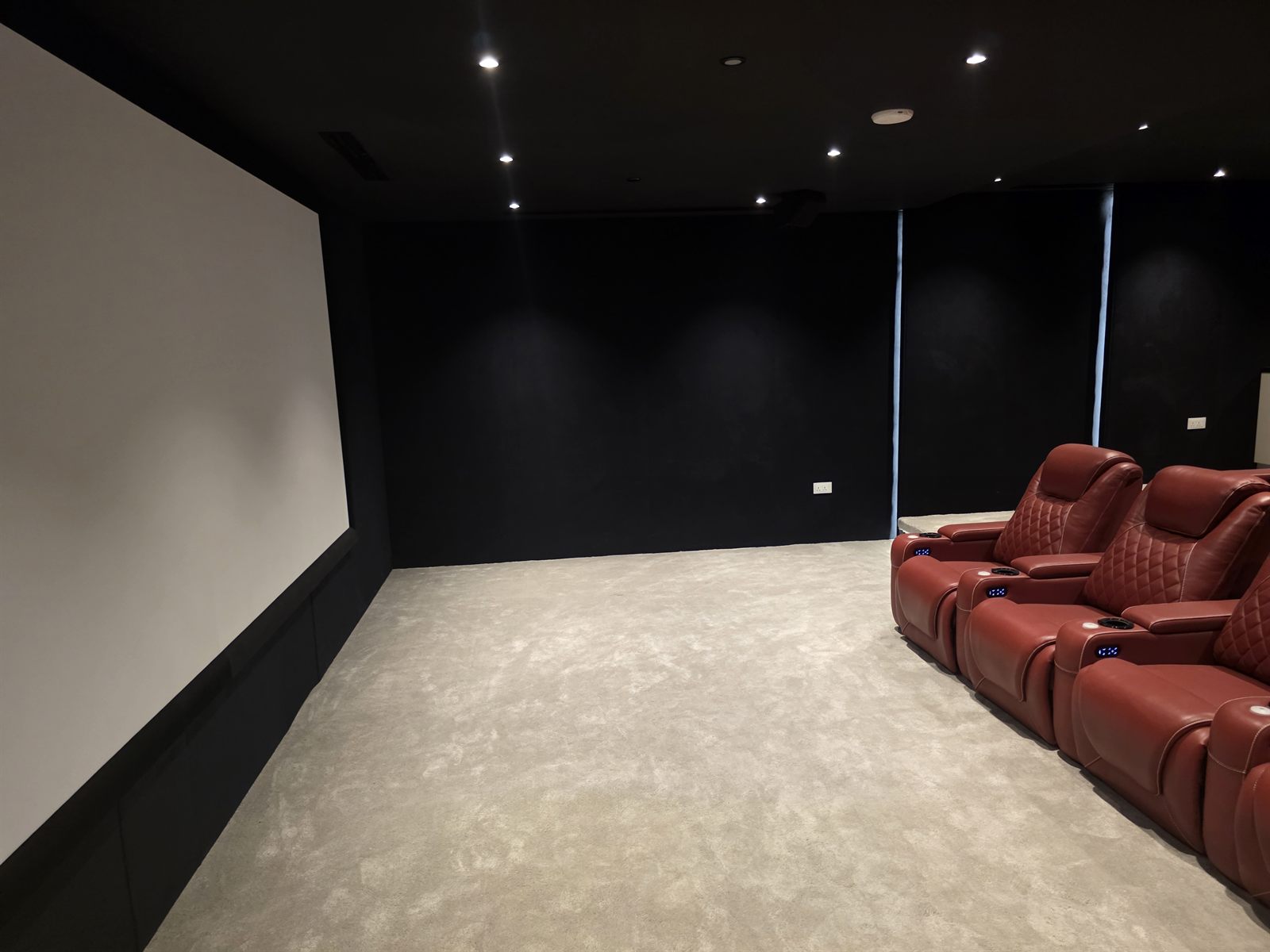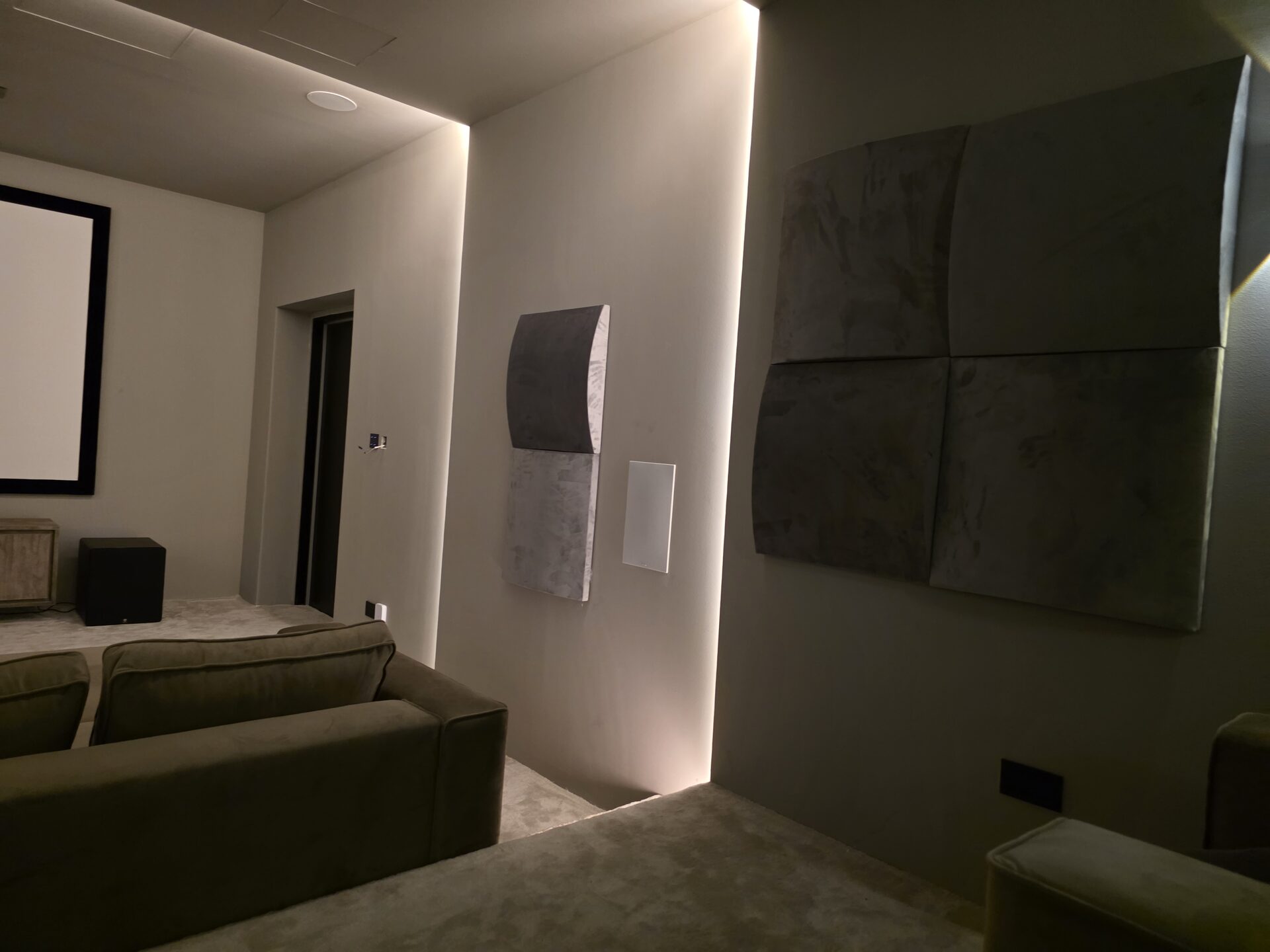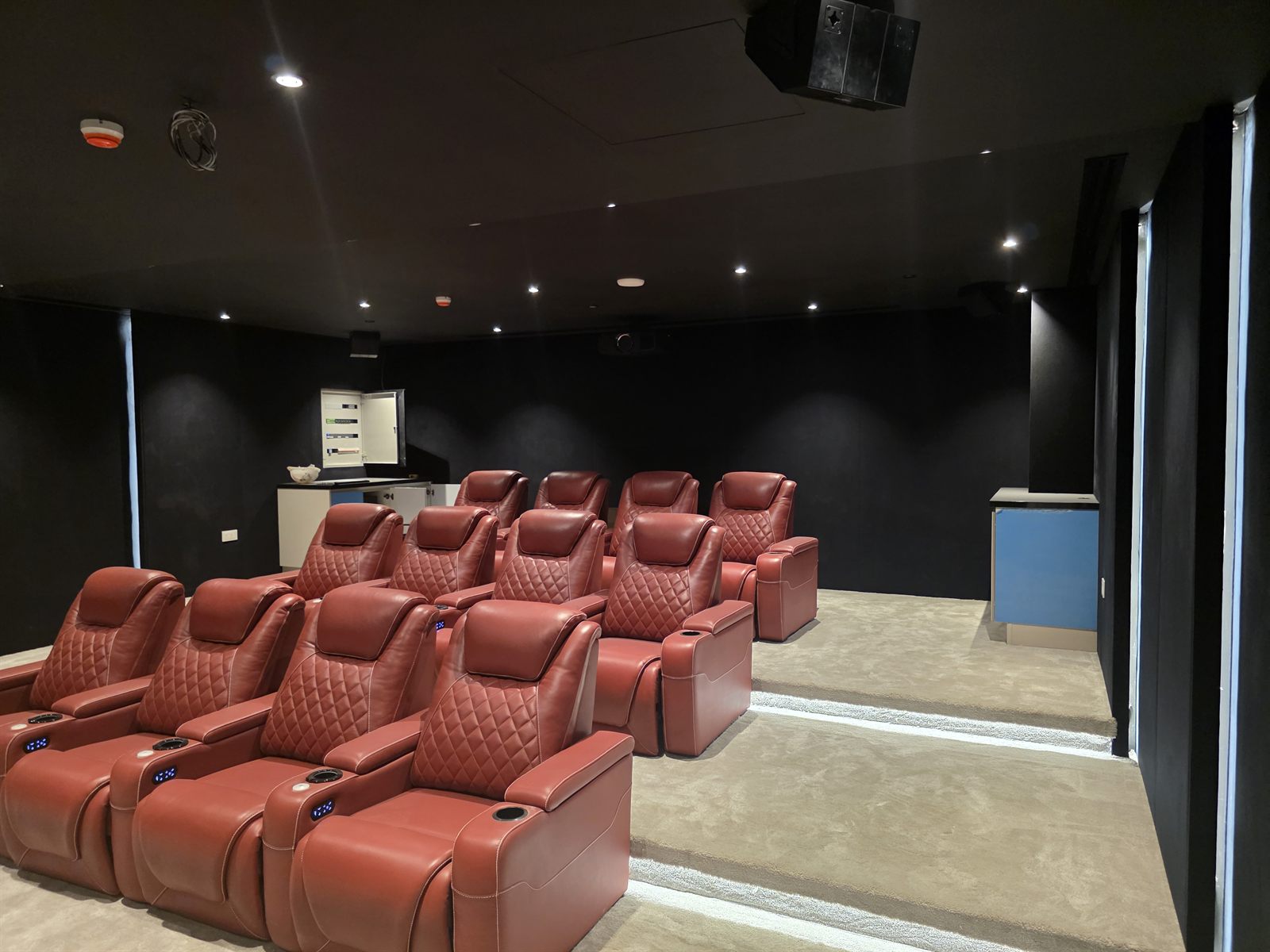

The short answer: yes, in a room designed for it. Dolby Atmos adds a layer of sound above you and lets effects move precisely around the room, and in a treated, calibrated cinema the difference is obvious from the first scene. In an untreated room, or under a ceiling that can't take proper height speakers, the same money is usually better spent on the room first.
What Dolby Atmos is
Traditional surround sound (5.1, 7.1) is channel-based: the soundtrack is mixed for a fixed set of speakers, and each speaker plays its own channel. Dolby Atmos is object-based. The sound mixer places individual sounds, such as a helicopter, rain or a voice off-screen, as objects in three-dimensional space, including overhead. Your processor then works out, in real time, how to play each object on the speakers in your particular room.
The practical result is a height layer of sound above the seats, and movement that is smooth and precisely placed rather than jumping from speaker to speaker.
Many new films and series carry Atmos soundtracks. On Blu-ray, Atmos is usually delivered in lossless Dolby TrueHD. Streaming services deliver it in compressed Dolby Digital Plus. Both work; disc sounds better in a room that can reveal the difference.
What the numbers mean: 5.1.2, 7.2.4, 9.4.6
An Atmos layout is written as three numbers:
- First number: speakers at ear level (front, centre, sides, rear).
- Second number: subwoofers.
- Third number: overhead (height) speakers.
| Layout | What it is | Typically suits |
|---|---|---|
| 5.1.2 | Five ear-level speakers, one sub, two overhead | Media rooms and compact spaces; the entry to Atmos |
| 7.2.4 | Seven ear-level, two subs, four overhead | A common, well-balanced layout for a dedicated room |
| 9.4.6 and above | Wides added at ear level, more subs, six overhead | Larger rooms and multiple rows, where every seat must be covered |
More speakers are not automatically better. The right layout depends on the room's size, the number of rows, the ceiling height and where the seats are. That's why the seating plan comes before the speaker count.
Soundbar or a real speaker layout?
Atmos soundbars and up-firing speakers bounce sound off the ceiling to create the height effect. How well that works depends heavily on the ceiling's height, shape and material. In a living room or media room, a good soundbar can be a sensible compromise.
In a dedicated cinema, discrete overhead speakers placed at the right angles to the seats give far more precise and consistent results, especially across more than one row. Ear-level speakers can sit behind an acoustically transparent screen, so the sound comes from the picture.
When Atmos is worth it, and when to wait
Worth it when:
- The room is dedicated, or light and sound can be controlled.
- The ceiling can take properly placed height speakers, and ideally it is still open.
- The room is being treated and calibrated, so the extra channels are heard clearly.
Fix the room first when:
- The room is untreated. Reflections and uneven bass will mask most of what Atmos adds. Why treatment comes first.
- The budget is tight. Treatment, engineered bass and calibration make a bigger difference per dirham than extra speakers.
What makes Atmos work in a real room
- Speaker positions relative to the seats, not just to the room. The angles to the listening positions are what place the sound correctly.
- Coverage across every row. In a two- or three-row room, the layout has to work for the back row too, not just the best seat.
- Bass management. Multiple subwoofers, placed and integrated so the bass is even across the seats.
- Calibration. Every speaker measured and matched for level and timing at the seats. Without it, the objects don't land where the mixer placed them.
Atmos in our series
| Series | Audio |
|---|---|
| Performance | Immersive surround with engineered bass |
| Reference | Dolby Atmos, multiple subwoofers, reference sound levels |
| Signature | Flagship Atmos, with every seat at reference |
Every room is designed for its space, so the investment depends on size and finish. Your Design Session gives you three real options.
Can I upgrade my existing system to Atmos?
Often, yes. You'll need an Atmos-capable AV processor or receiver, height speakers, and cabling to the ceiling, which is far easier while the ceiling is open. We measure the room first, keep every component that earns its place, and design the upgrade around it.
Frequently asked questions
Do I need special speakers for Dolby Atmos?
You need an Atmos-capable processor or receiver and height speakers: ideally in-ceiling or high on the walls, or up-firing modules as a compromise. Your existing ear-level speakers can often stay.
What does 7.2.4 mean?
Seven speakers at ear level, two subwoofers and four overhead speakers. The first number is ear-level speakers, the second is subwoofers, and the third is height speakers.
Is an Atmos soundbar good enough?
In a living room or media room, a good soundbar can be a sensible compromise. In a dedicated cinema, discrete overhead speakers give far more precise and consistent results across every seat.
Does Dolby Atmos work with streaming?
Yes. Streaming services deliver Atmos in compressed Dolby Digital Plus, while Blu-ray usually carries lossless Dolby TrueHD. Both play on an Atmos system; disc has the edge in a well-treated room.
What about DTS:X?
DTS:X is a competing object-based format. Most current AV processors play both, so a room designed for Atmos plays DTS:X soundtracks too.
Hear it for yourself
- Hear it first: hear a reference home cinema in Dubai before you decide.
- Talk to an engineer: book a free 60-minute Private Cinema Design Session.
- Planning the whole room? Read the private cinema buyer's guide.